—
Americans already know that college professors lean Left. What they do not realize is how lopsided the professoriate has become.
In a recent survey by the Foundation for Individual Rights and Expression (FIRE), Americans estimated that liberal professors outnumber conservatives by roughly two to one. FIRE’s national benchmark puts the actual ratio closer to five to one. At elite universities such as Yale, the imbalance can reach 36 to one, with some departments employing virtually no conservatives.
When respondents were shown those benchmark figures, confidence in higher education fell, especially among Republicans and independents. That finding turns academia’s usual defense on its head: The problem is not that the public exaggerates academia’s ideological imbalance. Americans imagine universities are considerably more intellectually diverse than they actually are.
This lack of intellectual diversity would be bad enough on its own. An ideological monoculture impoverishes teaching and research by failing to subject ideas to reasoned criticism. Students ultimately lose when universities present a narrow range of views without seriously considering alternative perspectives.
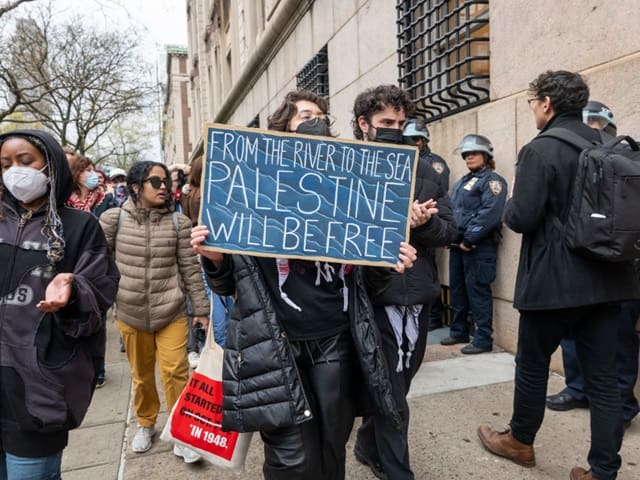
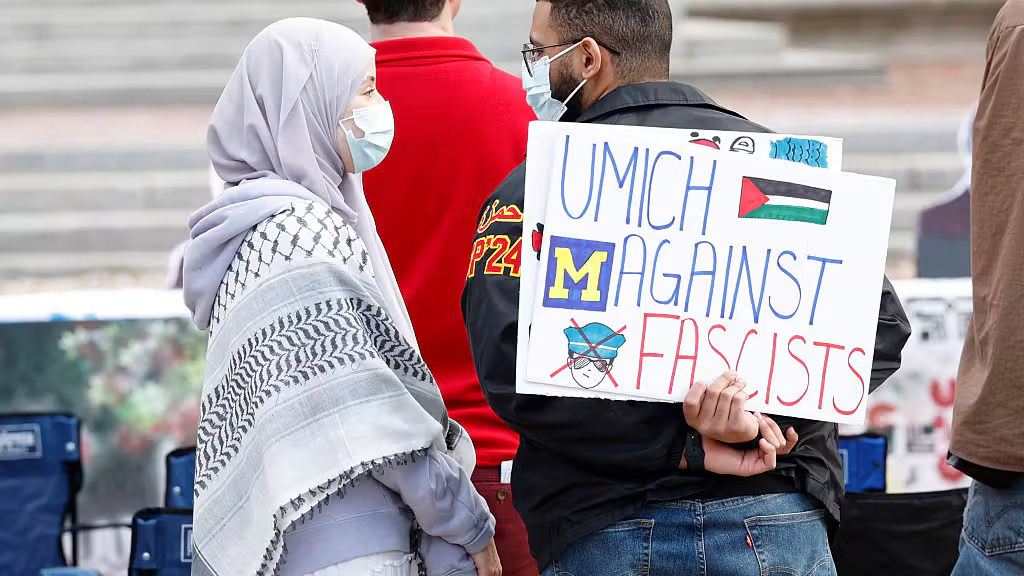
But the problem goes much deeper than the lack of Republicans in sociology departments or Trump voters in political science departments. Too many academics are engaging in bald-faced activism, seeking to change the world in an exclusively leftward direction rather than understand it.
This is especially true in the humanities and social sciences, including English, history, and sociology. As a recent report commissioned by Vanderbilt University and Washington University in St. Louis stated, many professors in the humanities are subordinating scholarly norms to the goal of “turning the humanities into vehicles for social justice,” which includes “anti-racism,” “the ‘decolonization’ of the academy and society more generally,” and “the replacement of ‘neoliberal’ capitalism with some form of socialism.”
A recent editorial in the academic journal “Race and Justice” puts this activist mindset on full display. Titled “Turning It Around: Progressive Strategies for Challenging Right-Wing Populism in the Era of MAGA,” the article states, “Since President Donald Trump got re-elected, it appears that things are getting worse every day,” and proposes “bold, creative strategies to challenge the MAGA agenda and restart the movement toward a sustaining and humane world order.”
The rest reads less like scholarship than a strategy session for the Left. One author advocates “a movement to foster class solidarity through forging a deep understanding of capitalism as the root of oppression.” Another declares that “we’ve already beaten MAGA once on the national electoral front.” A third writes, “The myth of white supremacy is woven into the foundational institutions of the United States,” adding, “The US Constitution … was essentially a contract of racial hierarchy.”
This screed did not appear in left-wing outlets like Jacobin, Slate, or The New York Times, but in an academic journal. All five authors work at public universities, including the flagship institutions of West Virginia and South Carolina. Taxpayers in those states subsidize this “scholarship.”
The problem is not confined to a single journal or discipline. In 2025, The Journal of the Society for Social Work and Research accepted an article detailing its authors’ deliberate attempts to make white students — but not students of any other race — uncomfortable to advance “anti-racism.” One author worked at Colorado State University, another public institution.
The issue is not that professors hold political views. It is that public universities increasingly treat political activism itself as legitimate academic work. Public universities exist to advance human knowledge and educate citizens, not to serve as platforms for political advocacy. Faculty members are paid to teach and perform legitimate academic work, not to conduct “research” at taxpayer expense that is indistinguishable from the work of a political advocacy organization.
To fix higher education, especially at public universities, we need to go back to the basics. That’s why the Goldwater Institute, where I work, has released the American Higher Education Restoration Act. It would require professors in non-STEM fields to teach a minimum of three courses per semester, reversing decades of declining teaching expectations. Professors seeking an exemption from that requirement to perform additional taxpayer-funded research would submit their proposed projects for review by fellow academics and other citizens who would determine whether they are likely to generate scholarship of at least nominal public value.
Academic research should have the potential to advance human knowledge, not serve as a cover for partisan efforts to achieve political outcomes. Our universities shouldn’t serve as activist boot camps. The American Higher Education Restoration Act would help return them to their proper purpose: educating students, advancing human knowledge, and serving the entire public.
***
Timothy K. Minella is the Director of Higher Education at the Goldwater Institute’s Van Sittert Center for Constitutional Advocacy.